
City services
The Bristol Transfer Station, and the 2.5-Ton Threshold
Bristol weighs you in and weighs you out. Cross 2.5 tons in a year and the following year costs you more — and a single renovation can do it.
Where it is, and the white rock
Bristol's solid waste transfer station is on Lake Avenue, off Middle Street, opposite number 705. The City's own directions tell you to look for the Transfer Station sign and a large white rock on the property beside the access road, which is a pleasingly practical piece of municipal wayfinding and genuinely how people find it.
For a resident with a permit and a pickup truck it is a useful facility, and for anyone doing steady small disposal it beats waiting on a bulk appointment.
The permit and the scale
You need a residential permit to use it. Funds and balances are handled online through E-Bill Express, so you can check what you have left before driving over.
The charge is not a flat gate fee. It is a user fee based on the weight of the material, and the weight is calculated properly: your vehicle is weighed on an inbound and outbound scale and you pay on the difference.
That has a consequence people do not always think through. Because everything is weighed, everything is counted — and the total is what the next section is about.
The 2.5-ton threshold
This is the mechanism that makes Bristol's transfer station different from most, and it is worth understanding before you plan a project around it.
The detail matters:
- An audit is completed on October 1 each year.
- The Department also considers your prior two years of transfer station usage when deciding reclassification.
- If you dispose of less than 2.5 tons the following year, you are reclassified back.
So it is not a penalty for one bad week — it is a rolling assessment of whether you are using a residential facility at something more than residential volume. Which is reasonable. It just means a heavy project has consequences that outlast the project.
How easily a project crosses it
Two and a half tons sounds like a lot. It is not, and here is why.
| Job | Approximate weight |
|---|---|
| Shingle roof tear-off, 22 squares | Roughly 3-4 tons |
| Slate roof tear-off | Well over 5 tons |
| Kitchen gut in a pre-war house | 1.5-3 tons with plaster and tile |
| Chimney take-down | 2-4 tons of brick alone |
| Small patio slab | 2-3 tons |
| Whole-house clear-out | 2-4 tons |
| Barn or outbuilding clearance | 3 tons upward |
A single roof crosses it. A gutted kitchen in an old house can cross it. A chimney certainly does.
And because the material is dense here — plaster and lath, chimney brick, slate, fieldstone, old-growth framing timber — the tonnage arrives faster than the same job would produce in a newer house.
This is the honest case for a container on a renovation, and it has nothing to do with convenience. Material that leaves in a roll-off does not accumulate against your residential permit at all.
What the transfer station takes
The City's ordinance describes bulky waste at the transfer station as including sheet rock, roof shingles, tile, leaves, grass, yard waste, sand, rocks, brush, stumps, appliances and metal — along with other materials authorised by the board of public works.
That is a broad and useful list, and notably it covers the renovation materials that bulk pickup's four-foot bundling rule cannot handle. Used motor oil is also recycled there, and tires are accepted with a residential permit at a maximum of four per day.
Household hazardous waste is separate
Chemicals do not go to the transfer station with everything else. Bristol runs household hazardous waste collection with Tunxis Recycling, and the terms are specific:
- Free for Bristol residents, with resident ID required
- A five gallon per person limit
- Products must be sealed and packed in a sturdy crate or box
- No waste from businesses or contractors
- Never smoke while handling, and do not leave material in the car longer than necessary
That contractor exclusion is worth reading twice. If a trade is doing your work and generating chemical waste, the household route is not available to them and they must handle it properly themselves.
For large amounts of paint, the City points to PaintCare drop-off locations. Lead-acid car batteries go to a scrap dealer or battery retailer.
Yard waste is a paid subscription
Worth knowing because people assume it is included.
Bristol's yard waste collection is a paid seasonal service. The 2026 season runs from April 6 to December 4, with new service at $140 and renewals at $90, applied and paid for online.
If you are not subscribed, brush and yard debris go to the transfer station with a permit — where it is weighed and counts toward your annual tonnage — or into a container.
Deciding between the two routes
A straightforward way to think about it:
- Small, steady, ongoing disposal — a few bags, a broken chair, garden clearing. Transfer station permit. That is what it is for.
- One tidy household job, no deadline, and you do not mind bundling — the free annual bulk collection.
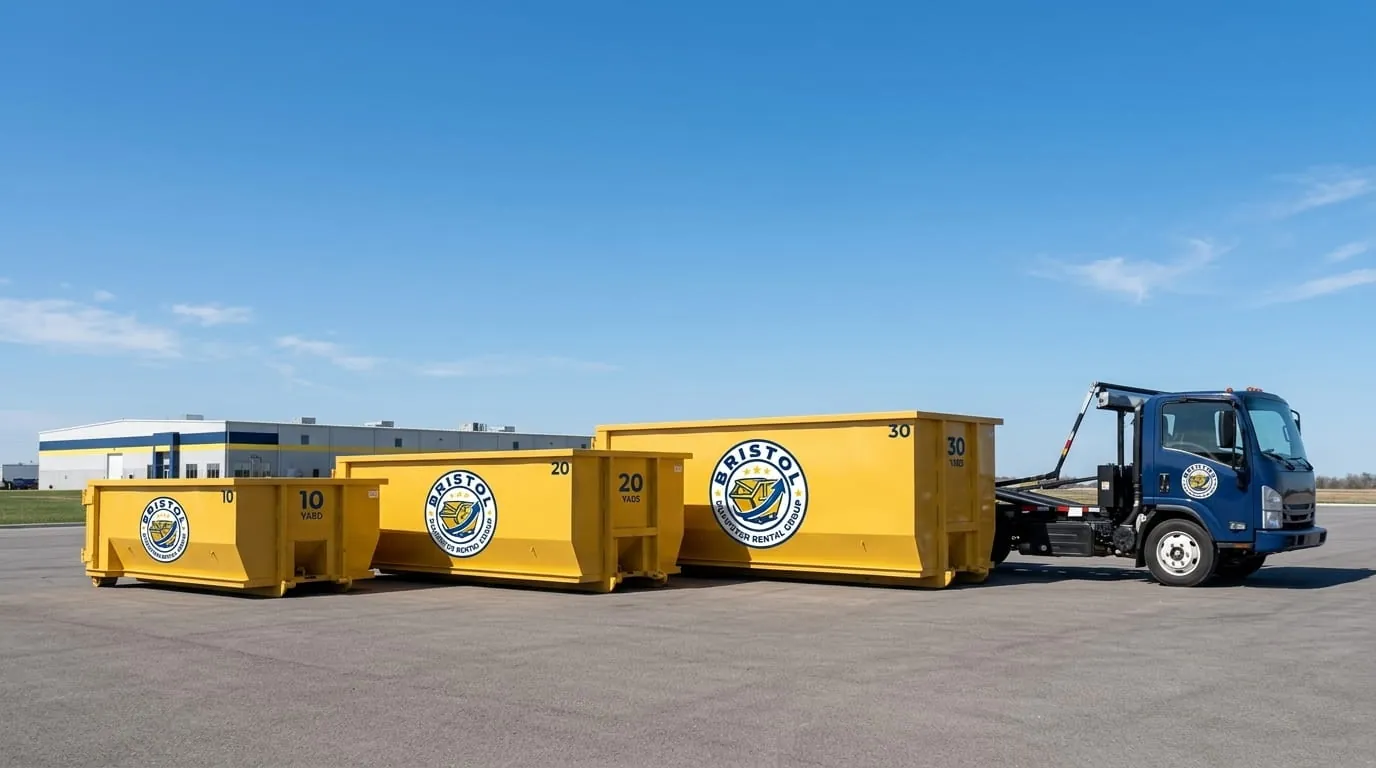
- A renovation, roof, chimney, clear-out or anything over a ton or two — a container. It keeps the tonnage off your permit, it takes material as it comes without cutting or tying, and it is on your driveway the same week rather than four weeks out.
We would genuinely rather tell you to use the City service for a small job than sell you a container you do not need. Call and describe it.
Permit terms and fees change. The 2.5-ton threshold, the October 1 audit, the yard waste season dates and the subscription prices above reflect the City's published position at the time of writing. Confirm current details with Bristol Public Works on (860) 584-6125.
Need a container in Bristol?
Call and describe the job. Three minutes on the phone gets you a size recommendation, a flat rate and a delivery window — and we will tell you if a smaller, cheaper container is the right answer.
Call (860) 845-1462