
Sizing
What Size Dumpster Do I Need? An Honest Bristol Guide
Most sizing guides lead with cubic yards. What actually decides the container around here is what your house is made of and how far up the hill it sits.
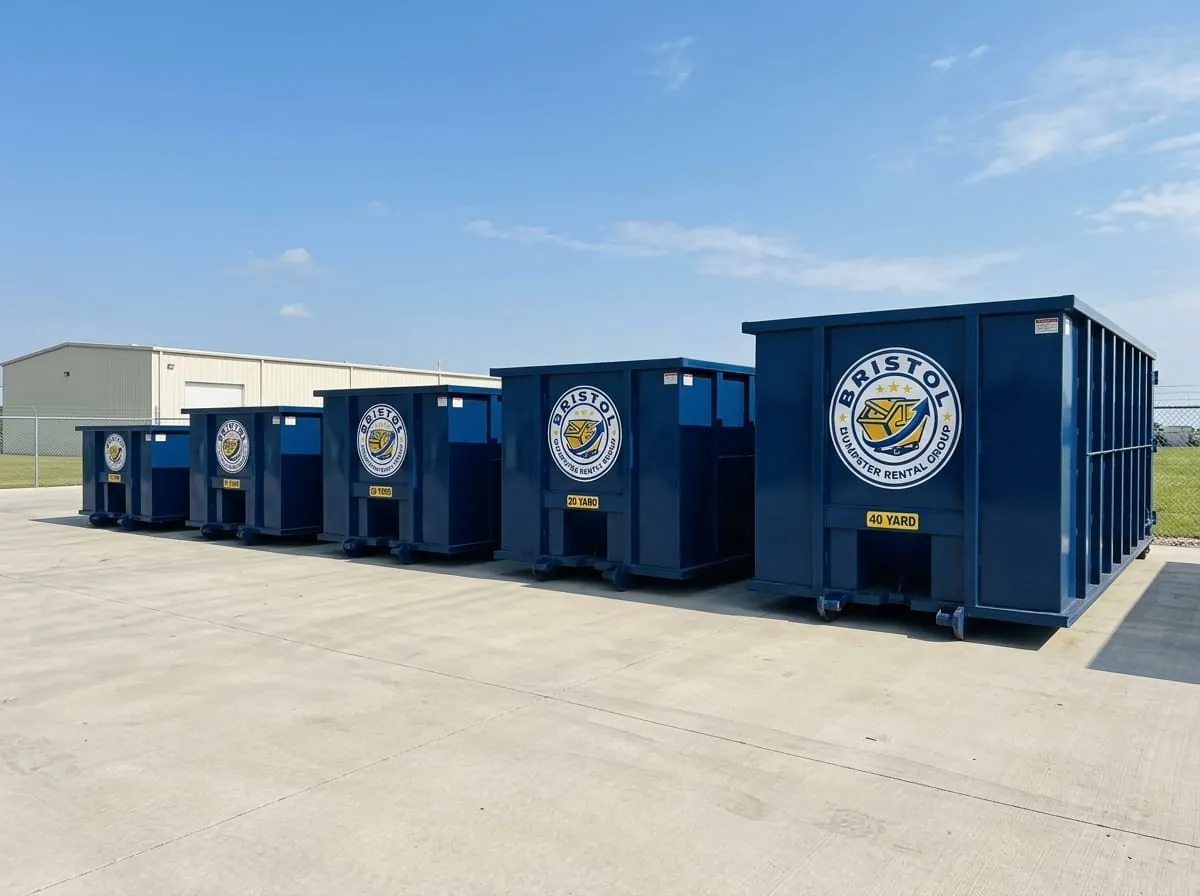
Start with the material, not the number
Almost nobody can estimate their own debris in cubic yards, and the guides that ask you to are not much help. What we actually ask on the phone is three things: what are you throwing away, roughly how much of it in terms you can picture, and where will the container sit.
Those three answers pick the size reliably. The cubic yard figure is just how we label the box afterwards.
The two constraints: volume and weight
Every container has two limits and you will hit one of them first. Volume is obvious — the box is only so big and you cannot load above the top rail. Weight is the one people forget, and it is the one that costs money.
Each size includes a tonnage allowance. A 10 yard typically includes one to two tons, a 30 yard four to five. Beyond that you pay a per-ton overage rate, which we quote before you book.
What each size really holds
10 yard — 12 ft × 8 ft × 3.5 ft
Three to four pickup loads. One to two tons. The small-job container and, more importantly, the heavy material container: a bathroom gut, a chimney take-down, a patio slab, fieldstone, plaster. Low sides mean you can throw material over the wall without a ramp.
15 yard — 16 ft × 8 ft × 4 ft
Five to six pickup loads. Two to three tons. The most under-used size in the industry and the one we place most often in Plainville, the older Waterbury neighbourhoods and the tight village centres, where sixteen feet fits and twenty-two does not.
20 yard — 22 ft × 8 ft × 4.5 ft
Seven to eight pickup loads. Three to four tons. The standard container across Bristol's own suburban streets, Southington, Cheshire and the newer developments where driveways are generous.
30 yard — 22 ft × 8 ft × 6 ft
Ten to twelve pickup loads. Four to five tons. Same footprint as the 20 with eighteen more inches of height, so it holds half again as much without needing any more driveway. The builder's container and the right call for a barn clearance or a whole-house clear-out.
Worked examples from real local jobs
| Job | Size | Why |
|---|---|---|
| Bathroom gut in a pre-war house | 10 yard | Small volume, plaster and tile are dense |
| Chimney take-down | 10 yard | Brick runs about 2 tons per cubic yard |
| Patio or walkway slab removal | 10 yard | Concrete is roughly 2 tons per cubic yard |
| Slate roof tear-off | 10 yard + swaps | Three to five times shingle weight |
| Deck removal | 15 yard | Treated timber: bulky, moderate weight |
| Kitchen renovation, mid-size | 15-20 yard | Cabinetry eats volume; tile pushes weight up |
| Tight village street, any job | 15 yard | Access is the limit, not volume |
| Shingle re-roof, 26 squares | 20 yard | Around 4 tons - at the allowance limit |
| Three-bed whole-house clear-out | 20 yard | Furniture and contents eat volume fast |
| Barn or outbuilding clearance | 30 yard | Huge volume; watch for stone and machinery |
| Full interior demolition, old house | 30 yard + swap | Volume and weight both high |
Plaster and lath changes everything
This is the single biggest sizing factor in this area and it catches people who have only renovated newer houses.
Anything built here before roughly 1950 — which is a very large share of Bristol, Plainville, Terryville, Thomaston and the older Waterbury and Torrington neighbourhoods — has plaster on wood lath, not drywall. Plaster is applied wet in three coats over thousands of thin wooden strips, and the result is far heavier than the sheet material that replaced it.
A room stripped back to the studs in a 1920s house produces roughly twice the weight of the same room in a 1990s house. People book a 20 yard on volume, fill it a third of the way, and discover the weight allowance is gone.
The same applies to the other old-house materials: chimney brick, slate, fieldstone foundations and hand-hewn framing timber, which is denser than anything milled today.
The practical rule: on any pre-war house, size down and plan on a swap. And put the masonry in its own 10 yard, because clean brick, block and concrete have a cheaper disposal route than mixed debris.
The hill towns change access, not size
West and north-west of us the land climbs quickly, and that changes what we can place rather than what you need.
In Harwinton, Burlington, Litchfield, Bethlehem and out toward New Hartford, properties sit well back on long drives that are often gravel and frequently on a grade. The questions become surface, slope, width and overhead clearance — the truck needs roughly twenty-two feet of clear height to raise its bed, and mature canopy over a narrow drive is the commonest reason we have to reposition.
Sometimes the honest answer is a smaller container placed where it can sit safely, rather than the size the debris calls for placed somewhere it will slide, sink or rut the drive. We will say so.
How the City's free collection compares
Worth checking before you book anything, because you have already paid for it.
Bristol gives each residential building one free bulk collection a year, scheduled through Public Works. For a few pieces of furniture and an old appliance that is a perfectly good service and we will tell you so.
Two things stop it being a renovation solution. Appointments are typically two to four weeks out, and everything has to be prepared to the City's specification first — wood in four-foot lengths with no nails, tied and bundled; metal cut and bundled in four-foot lengths; carpet cut in four-foot strips, rolled and tied. The full rules are here, and they are more demanding than most people expect.
How to describe your job on the phone
- What the material is. "Kitchen cabinets, countertop, appliances and about 200 square feet of tile floor" tells us everything.
- Roughly when the house was built. Pre-war means plaster, and plaster changes the container.
- Whether there is masonry, slate or stone in it. Those get their own 10 yard.
- Which town, and how far up the hill. Access varies enormously across our area.
- Your driveway surface, width and grade, and whether there are low branches.
- Whether the property is on a private road, which affects municipal collection.
That is a ninety-second conversation and it is the difference between a flat rate that holds and a truck that has to leave again.
Need a container in Bristol?
Call and describe the job. Three minutes on the phone gets you a size recommendation, a flat rate and a delivery window — and we will tell you if a smaller, cheaper container is the right answer.
Call (860) 845-1462